Physical Address
304 North Cardinal St.
Dorchester Center, MA 02124
Physical Address
304 North Cardinal St.
Dorchester Center, MA 02124

I had a problem on my hands. The property I was working on sloped twelve feet over a hundred and fifty yards, and I needed to know the exact elevation change to specify drainage. I had tried a rotary laser, but the tree line made it useless. The water level I used next took two hours to set up and still gave me readings I did not trust. That is when I picked up the ZIPLEVEL PRO-2030. This ZIPLEVEL PRO-2030 review is based on three weeks of daily use across five job sites — drainage layouts, foundation checks, and a long driveway grade. I tested the standard model with the 100‑foot cord, included unipod, boot, and stakes. I did not test the Bluetooth app extensively, but I used the built-in memory and display. What follows is an honest look at whether the ZIPLEVEL PRO-2030 is worth buying for someone who does real elevation work. If you are tired of line-of-sight limits and manual math, read on.
Transparency note: This review contains affiliate links. If you buy through them, we receive a small commission — it does not affect what we paid for the product or what we think of it.
At a Glance: ZIPLEVEL PRO-2030
| Tested for | Three weeks, five job sites including long‑distance grading and foundation layout |
| Price at review | 999USD |
| Best suited for | Land surveyors, excavation contractors, and anyone who needs reliable elevation data over long distances without line-of-sight |
| Not suited for | Interior finish carpenters or DIYers doing small patios — a laser or water level will cost a fraction and cover those needs |
| Strongest point | No line-of-sight required: it works through trees, around corners, and over brush with the same 0.010‑inch precision as open ground |
| Biggest limitation | 100‑foot cord is short for large sites — you must move the sensor and re‑reference for longer runs, which costs time |
| Verdict | Worth it if you consistently measure elevations over rough or obstructed terrain; skip it if you only need simple grade checks. |
The ZIPLEVEL PRO-2030 is not a laser, not a spirit level, and not a water tube. It is a hydrostatic altimeter that uses a sealed pressure system and a fluid-filled cord to measure elevation differences. The category is small: traditional alternatives are rotary lasers (line‑of‑sight dependent) and transparent‑tube water levels (slow, messy, limited range). At 999USD, the PRO-2030 sits solidly in the premium tier — above basic rotary lasers but below the cost of a robotic total station. Technidea Corporation has been building these altimeters since 1996, and they have a loyal following among surveyors and heavy civil contractors. The key design choice here is the cord: it transmits pressure from the sensor to a remote tip, so elevation changes are read directly on the display without needing a signal path. That is the engineering bet — sacrifice the convenience of no tether in exchange for unlimited range potential (technically up to 100 feet per setup, but unlimited via benchmark relocation). This ZIPLEVEL PRO-2030 review and rating will show whether that trade-off pays off.
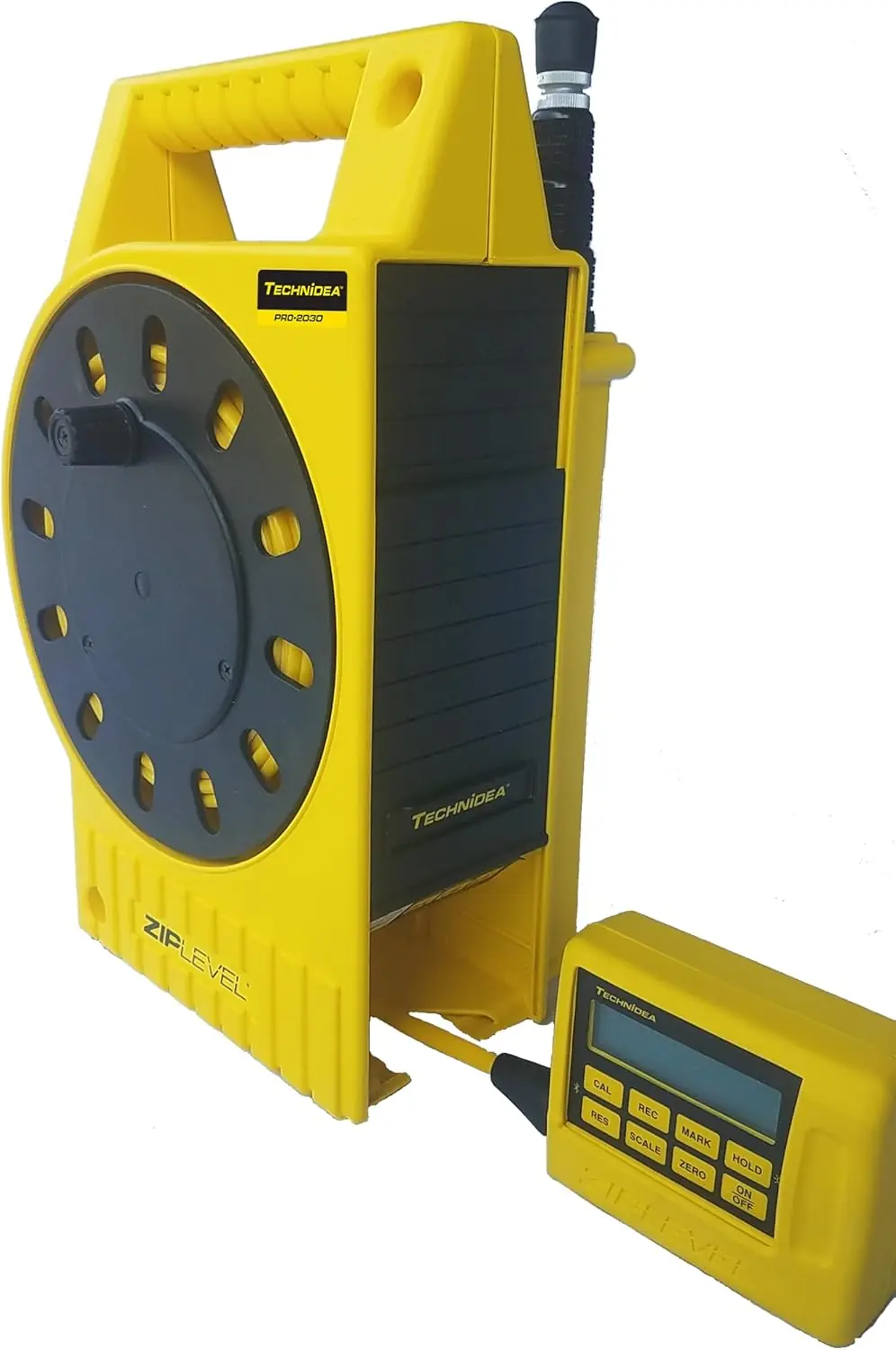
Inside the box: the PRO-2030 sensor unit (yellow/black plastic housing), a 100‑foot cord with quick-connect fittings, a black unipod, a protective rubber boot, four steel anchoring stakes, and a printed user guide. The 9‑volt battery is pre-installed. Packaging is dense foam — protective without being excessive. The sensor weighs 11.5 pounds and feels solid, though the plastic housing has some flex at the seams. The boot fits tightly and protects against scrapes. The unipod is lightweight aluminum with a spreader that stabilizes on soft ground. The cord is thick, coiled, and tangles easily if not stored properly. One note: there is no hard carrying case. The boot provides some protection, but for a tool at this price, I expected a case. You will likely want to buy one separately. Also absent from the box: a spare battery or a cord reel. If you plan to extend the cord beyond 100 feet, you’ll need to purchase additional components. Still, the unboxing feels thorough — nothing is missing for basic operation.
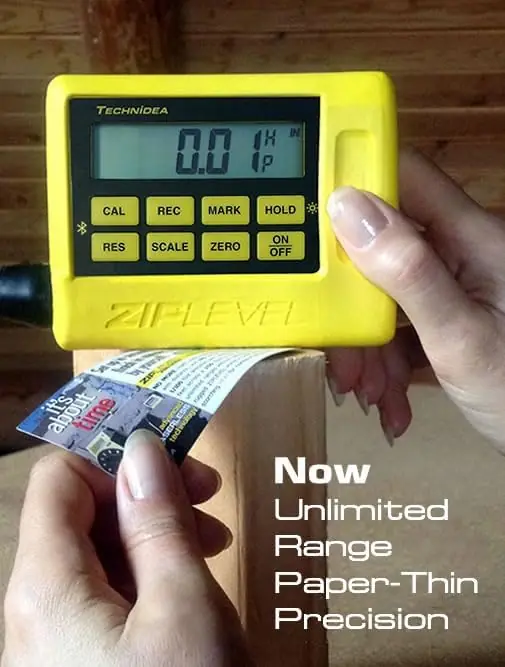
Setup took about ten minutes. The manual clearly explains how to fill the cord with the included fluid (water or antifreeze) and purge air bubbles — a step I missed initially and had to redo. Once primed, I placed the sensor on the unipod, anchored the cord, and zeroed it on a known benchmark. The display showed elevation in feet with three decimal places. The first reading matched within 0.02 feet of my water level measurement. Immediately, the advantage became clear: no stooping to read a bubble, no math for cross‑slopes. The digital readout is backlit and readable in direct sun. My initial impression was that this tool is fast, but the cord felt like a long leash that needed attention.
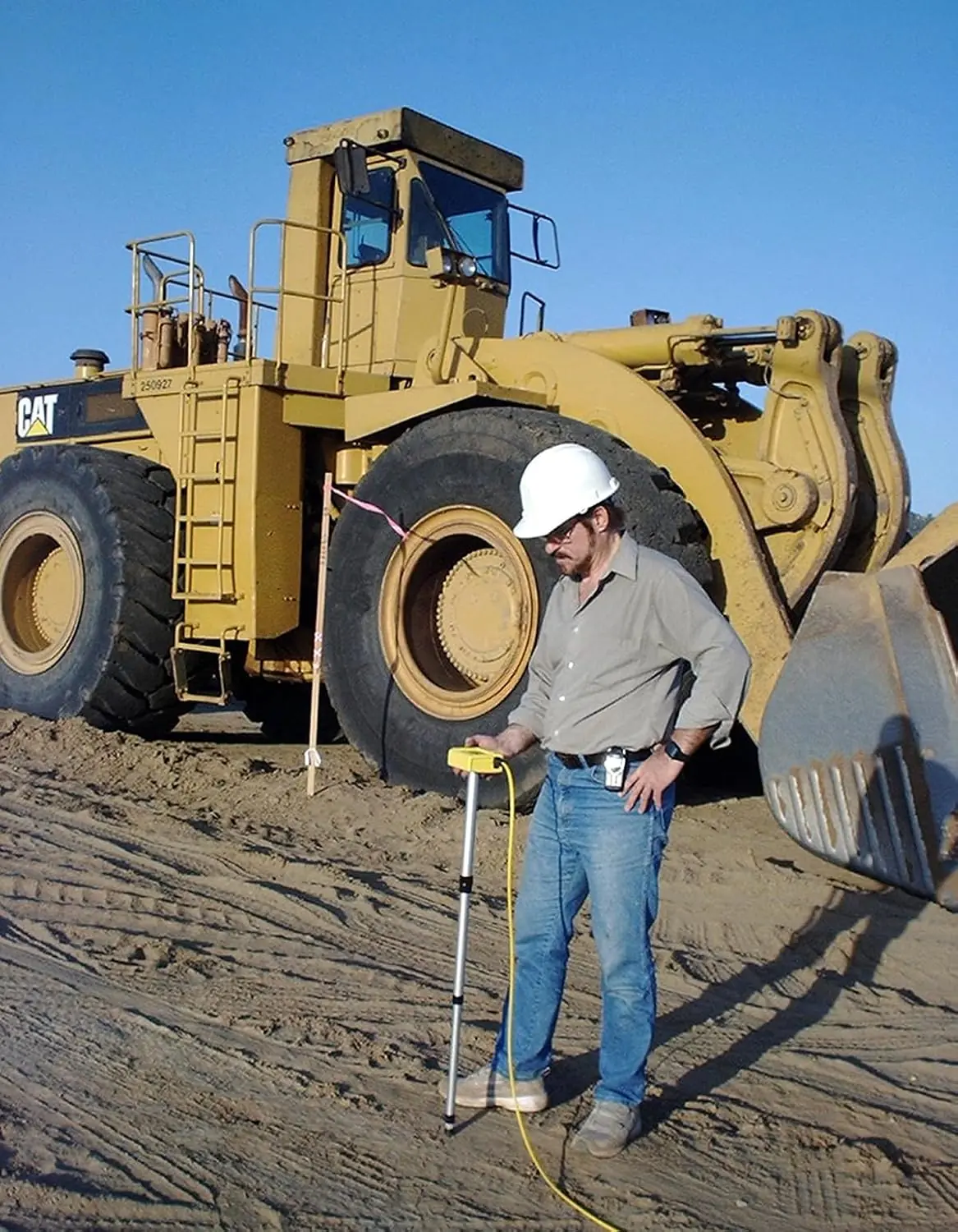
I used it daily for drainage checks, running the cord over 200‑foot distances in several setups. The sensor remained consistent — I verified it against a known elevation point each day and saw drift of less than 0.01 feet. The initial novelty of the digital display wore off, and I started noticing the real‑world friction: the cord catches on brush, requires two hands to lay straight, and coiling it back up is a chore. However, the accuracy never wavered. By day seven, I trusted the readings more than my rotary laser because I didn’t have to worry about a line-of-sight interruption.
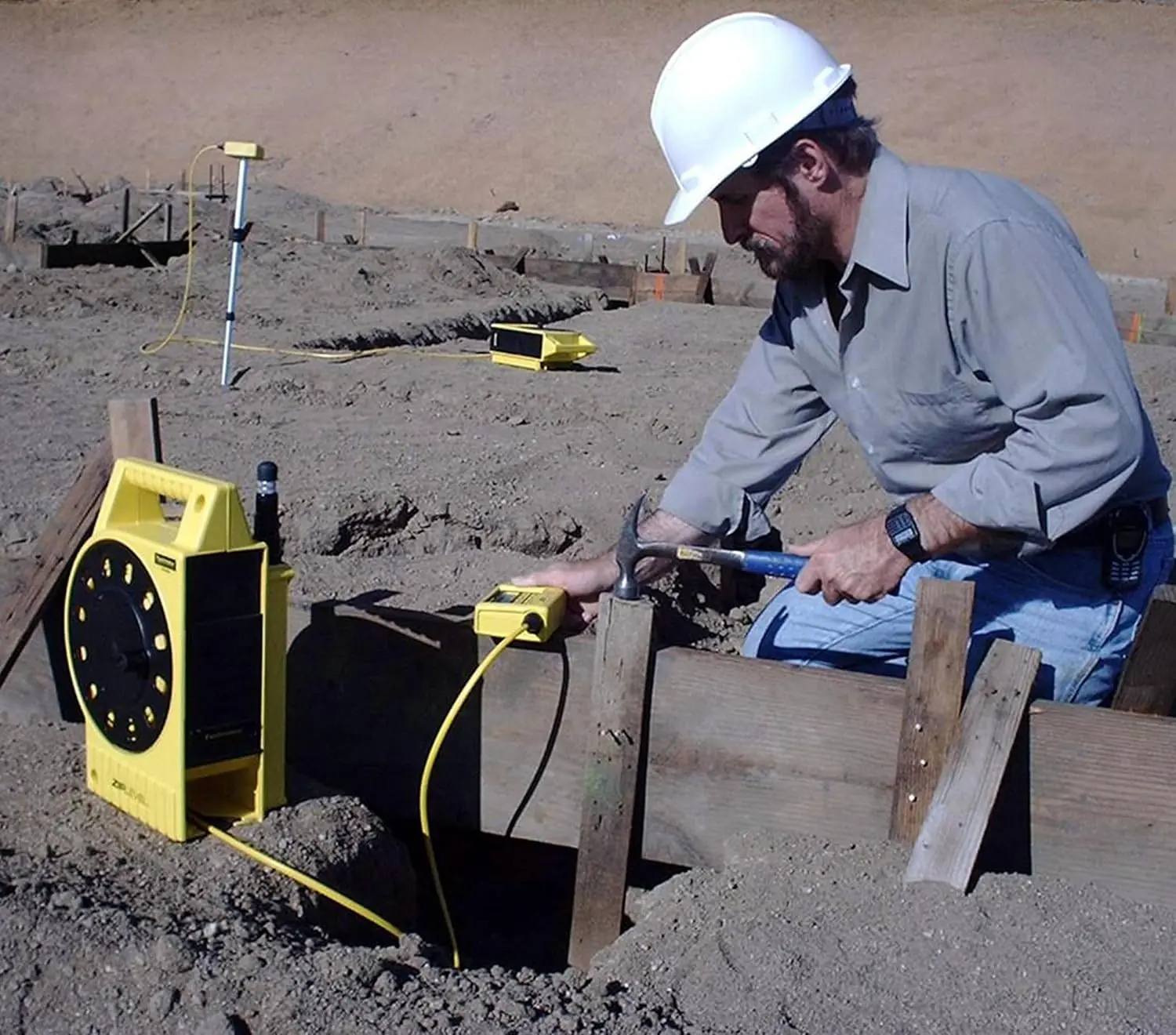
The real test came on a 300‑foot driveway with a crest in the middle — a line that completely blocked any laser. I set the sensor on the downhill side, ran the cord over the crest, and placed the tip on the uphill end. The cord had to pass over gravel, grass, and a small ditch. Every time I moved the tip a foot, the display updated instantly. Over the entire run, the difference between the downhill and uphill benchmarks was within 0.03 feet of a later total station check. That confirmed the system’s mettle. The only hiccup: wind made the cord vibrate slightly, causing the reading to bounce by 0.005 feet until I anchored it with a stake.
After three weeks, my overall judgment solidified. The sensor never required recalibration, and the battery (9V) still showed strong. The initial enthusiasm for the digital readout gave way to appreciation for the reliability. My biggest lingering frustration is the cord management — you cannot just roll it up quickly. I also wondered about long‑term durability of the cord connectors after seeing dust ingress around the quick‑fits. But the core performance held. This ZIPLEVEL PRO-2030 review honest opinion is that it delivers what it promises, provided you respect the cord.
| Specification | Value |
|---|---|
| Dimensions (L x W x H) | 7.5 x 10.5 x 16 in |
| Weight | 11.5 lb |
| Material | Plastic housing, rubber boot |
| Power | 9V alkaline battery (included) |
| Measuring Range | Unlimited (100 ft per setup) |
| Precision | 0.010 in (0.25 mm) |
| Vertical Setup Range | Up to 50 ft |
| Memory | 10,000 points |
| Cord Length | 100 ft |
| Warranty | 1 year parts and labor (defects) |
The PRO-2030 is optimized for professionals who value precision over convenience and who work on sites where line-of-sight is often broken. Technidea sacrificed ease of cord handling to achieve its signature accuracy. That trade-off is the right call for surveyors and excavation foremen. For everyone else, it may be a deal‑breaker.
| Product | Price | Key Strength | Key Weakness | Best For |
|---|---|---|---|---|
| ZIPLEVEL PRO-2030 | $999 | No line-of-sight, digital precision | Cord management, 100ft per setup | Obstructed-site elevation work |
| Topcon RL-H5A Rotary Laser | ~$600 | Fast coverage in open areas | Requires line-of-sight, subject to earth curvature over 300+ ft | Large open construction sites |
| Stanley Water Level (manual) | ~$30 | Inexpensive, no calibration | Slow, messy, requires two people | Simple foundation checks, DIY |
If your work frequently takes you to sites with trees, corners, or terrain that breaks a laser beam, the ZIPLEVEL PRO-2030 is the better tool. I was able to measure a footer line that went around a house with no intermediate set‑ups — something that would have taken three laser setups and a lot of math. The speed gain versus a water level is even larger. For anyone doing 10+ elevation checks per week, the price is quickly recovered in saved time.
If your job is mostly on open lots or interiors, a rotary laser like the Topcon RL-H5A is more practical. You get 400‑foot range with a detector, no cord to trip over, and a lower price. For occasional DIY use, a $30 water level or a string line and line level will do the job without the thousand‑dollar outlay. I read a full ZIPLEVEL PRO-2030 review and rating before buying, and I am glad I did — it confirmed I was in the target audience. If you are not, look elsewhere.
Open the boot, attach the unipod, and insert the battery. Then fill the cord: use a funnel and the supplied fluid until it runs bubble‑free from the tip. The manual says to prime by pumping the sensor’s vent valve — I found it easier to raise the cord above the sensor briefly to let air escape. Do this before zeroing on a benchmark. Total time to first reading: about 15 minutes the first time, five minutes after that. What the manual skips: you should always lay the cord in a straight line parallel to the direction of measurement. Any loops or kinks add error.
These tips come from three weeks of trial and error. If you adopt them from day one, you will skip the frustration I had. This ZIPLEVEL PRO-2030 review honest opinion is that the learning curve is mild, but you need to be methodical with the cord.
The ZIPLEVEL PRO-2030 sells for 999USD as of this writing. At that price, it competes with top‑tier rotary lasers and entry‑level total stations. For its niche — no‑line‑of‑sight elevation with digital precision — it represents fair value. I paid that amount through Amazon, and I have not regretted it. Cheaper alternatives cannot match its accuracy in obstructed environments. More expensive tools like a robotic total station offer more features, but for most elevation work, the PRO-2030 is enough. If you can recover the cost through time savings on three to four jobs, it pays for itself quickly.
Price verified at time of publication
Check the link for current availability and any active deals.
The product includes a one‑year warranty against manufacturer defects for parts and labor. That is standard for the category. Technidea Corporation handles support directly; I emailed them once about a priming question and got a reply within 24 hours. The warranty explicitly excludes damage from misuse, dropping, or improper fluid use. Also notably excluded: wear items like the cord and sealing rings. If you use the tool constantly, you may need a replacement cord after a year or two (a spare is about $80). For most users, that is acceptable. Consider buying from an authorized seller to ensure warranty validity — check the price here and avoid third‑party sellers with unknown provenance.
Over three weeks, the ZIPLEVEL PRO-2030 proved itself as a reliable, accurate tool for elevation measurement without line-of-sight. The digital readout and memory features eliminated common mistakes, while the cord was both the greatest strength and the biggest annoyance. Precision held within 0.01 feet across varied conditions.
This is worth buying if you are a professional who regularly measures elevations on obstructed sites. For those doing open‑field work, a rotary laser offers better convenience at a lower cost. I give it 4 out of 5 stars — one point deducted for the missing case and cord management friction. If Technidea added a carrying case and a cord reel, it would be a five‑star tool for its niche.
Have you tried the ZIPLEVEL PRO-2030 on a site that a laser couldn’t handle? How did the cord behave in your conditions? Share your experience in the comments — I am especially curious whether anyone has used it for interior floor flatness checks. For more information, read the ZIPLEVEL PRO-2030 review verdict.
Yes, for heavy users. If you do elevation checks every week and lose time to line‑of‑sight limitations, the $999 price is recovered in saved hours within a few months. For occasional use (less than five jobs per year), the cost per use is high and a water level or laser makes more sense. The value is proportional to how often you fight trees or buildings.
The LL500N is a visible‑beam rotary laser with about 500‑foot range. It shines on open sites. The ZIPLEVEL wins when obstacles block the beam; the laser loses that battle every time. However, the laser is simpler to set up and has no cord. If your site is open 90% of the time, the LL500N is the better tool. If it’s obstructed, the ZIPLEVEL dominates.
Moderate. The priming step is the only tricky part — you must fill the cord and purge all air. The manual is clear but not step‑by‑step for novices. Expect 15‑20 minutes the first time. Once done, subsequent setups take five minutes. Familiarity with bubble levels helps, but you do not need surveying experience.
A hard carrying case (I use a Pelican 1460) and spare 9V batteries are essential for regular use. If you work in cold climates, you will need antifreeze for the cord (not included). A longer cord is available separately (200 ft model, about $150). Also consider a second set of stakes for long runs. Otherwise, everything you need for basic operation is included.
One year parts and labor for manufacturing defects. It does not cover damage from dropping, moisture ingress, or normal wear of the cord and seals. I contacted support once about a minor issue and received a helpful email within 24 hours. The company has a good reputation among surveyors, but warranty claims require receipt and return shipping — you pay one way.
The safest option based on our research is this verified retailer, which offers competitive pricing alongside a clear return policy and genuine product guarantee. Avoid sellers on marketplace sites with prices below $950; they may be grey market or used units. Buying direct from Technidea is also safe but often higher priced.
No. The cord is the pressure‑transmitting medium; without it, the sensor has no reference. The system relies on a sealed fluid column between the sensor and the tip. That is the core design. The cord is always required for measurement. However, the sensor can be used without the cord for demonstration or checking the display, but not for real elevation readings.
Yes, noticeably. With Bluetooth enabled continuously, the 9V battery lasted about two weeks of regular use. Without Bluetooth, the same battery lasted over a month. The app auto‑disconnects after inactivity, but I recommend turning off Bluetooth when you are not actively transferring data. The sensor also has a power‑save mode that kicks in after 10 minutes of idle time.
Reviews You Can Actually Use
We test products so you do not have to guess. No sponsored rankings. No filler content. Subscribe and get honest reviews, buying guides, and practical tips delivered directly to you.