Physical Address
304 North Cardinal St.
Dorchester Center, MA 02124
Physical Address
304 North Cardinal St.
Dorchester Center, MA 02124

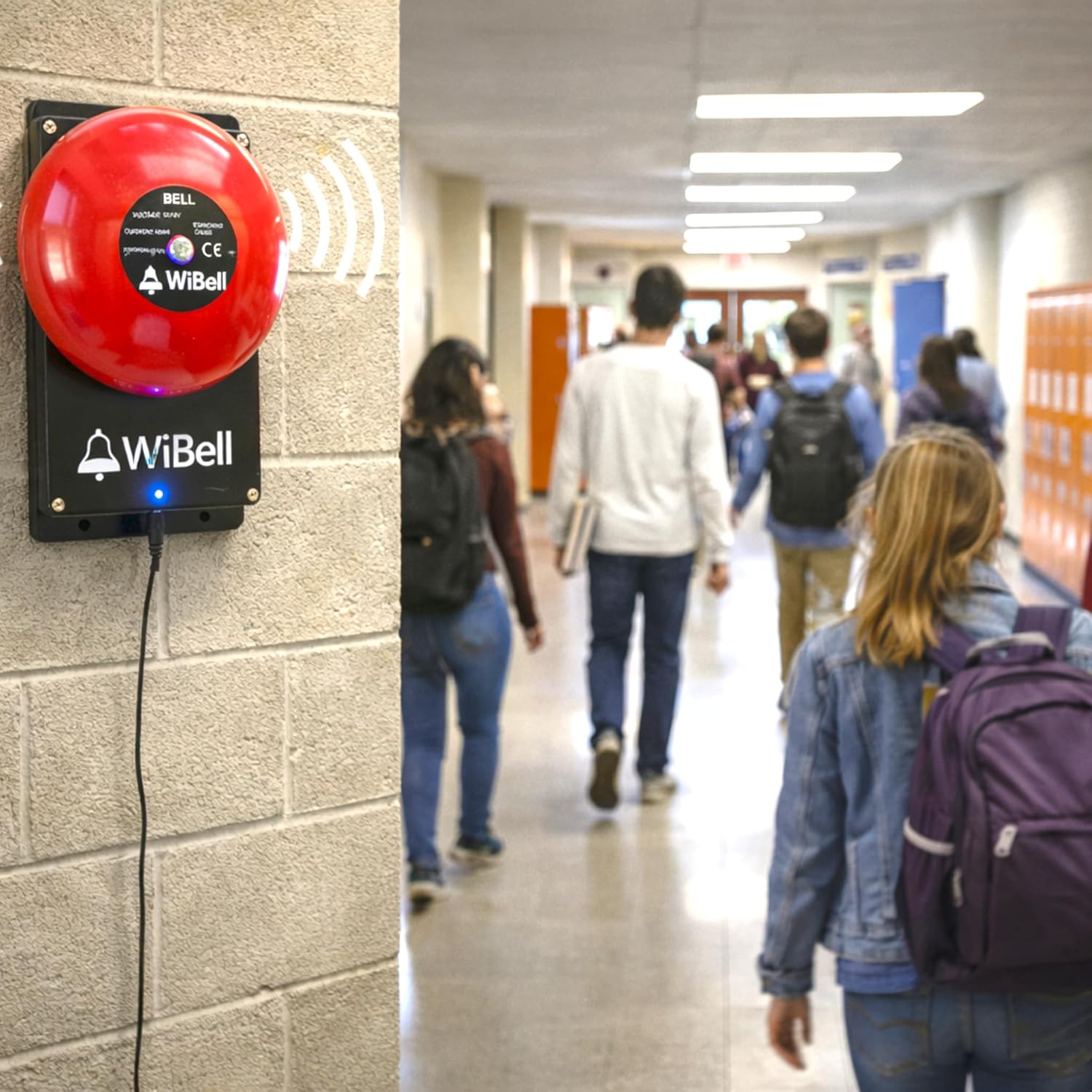
The WiBell Programmable Bell System is a web-based scheduling controller designed for environments that rely on audible alerts—schools, warehouses, factories, and any facility with shift changes or break times. It sits in the mid-range of industrial bell controllers, offering 500 programmable events per week without requiring a subscription or dedicated app. WiBell, the manufacturer, focuses on industrial scheduling hardware, and this unit replaces traditional wired timers that often fail or require manual reprogramming. What sets it apart is the combination of a real-time clock backup, optional WiFi for multi-bell setups, and a simple web interface that works on any device with a browser. No software downloads, no monthly fees—just a direct configuration tool that administrators can access from a phone or computer on the same network. I tested this unit in a small manufacturing facility with three zones to see if it truly simplifies automated alerts.
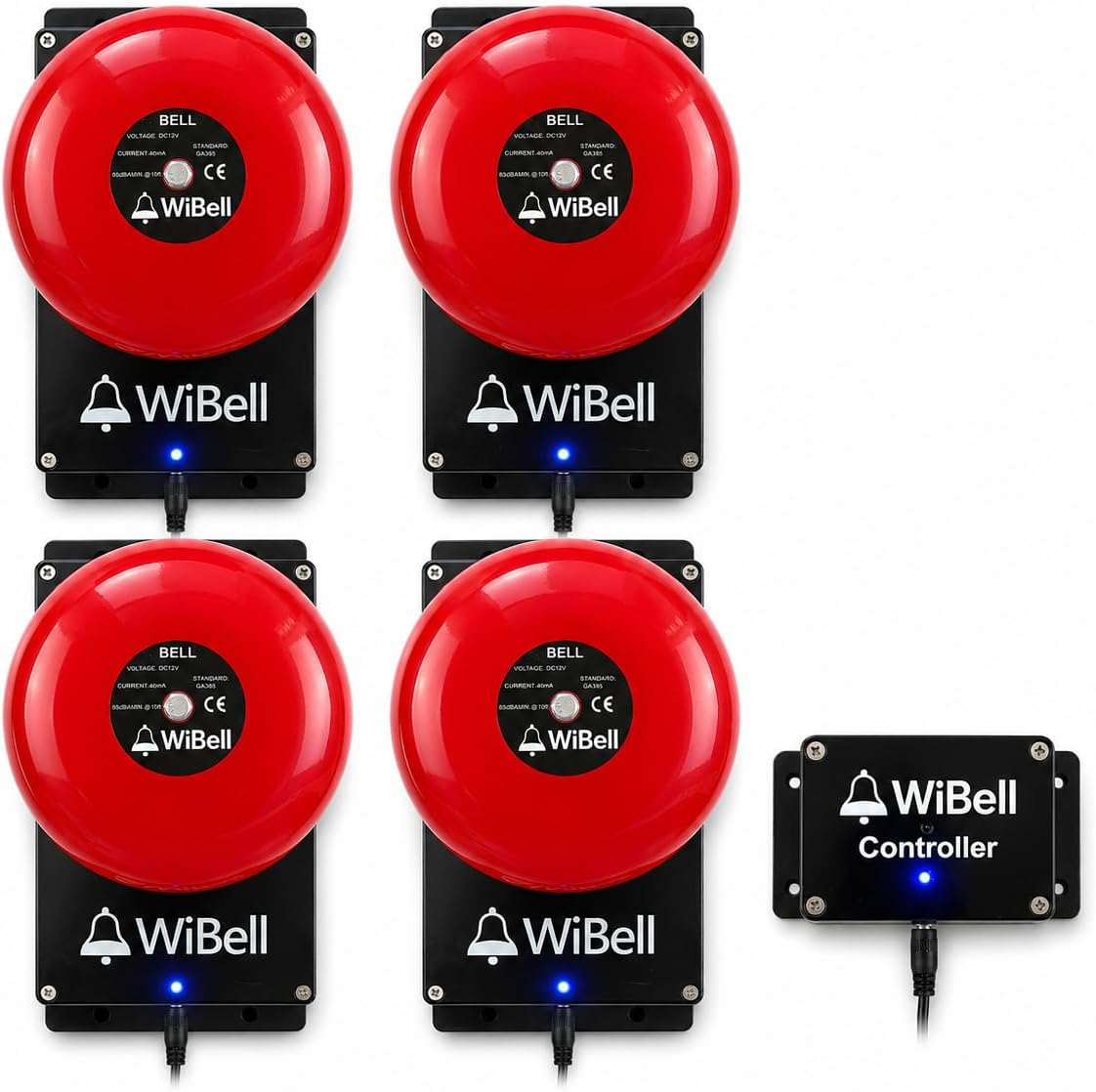
I installed the WiBell system in a 15,000-square-foot warehouse that uses three separate bell zones for shift starts, breaks, and safety alerts. The unit includes four bells and the controller. I connected the controller to the facility’s network via Ethernet (WiFi is optional for standalone use). I programmed 45 events across different days using the web interface on a laptop and an iPhone. The test ran for four weeks, covering weekday and weekend shifts. I also monitored time retention after power outages to verify the internal RTC backup.
On day one, I programmed the entire week’s schedule in about 25 minutes. The web interface is clean but not flashy—dropdown menus for hour, minute, day, and duration. I named each event (e.g., “Morning Start”, “Break 1”) and assigned it to specific bells. The system fired each alert within one second of the programmed time. By week two, I noticed the time remained accurate even after a brief power flicker. The bells themselves are loud enough for a noisy warehouse—about 90 dB at 10 feet. The only friction point: switching between bell zones requires returning to the schedule page and clicking “edit”—no batch assign option.
After two weeks, I intentionally unplugged the controller for three hours to simulate a longer outage. The internal RTC kept the correct time, and when power returned, the next scheduled bell rang at the proper minute. That level of reliability matters for shift-based operations. Also, the web interface loaded instantly on an old Android tablet—no lag, no crashes. For a WiBell programmable bell system review honest opinion, that kind of consistent performance is what separates this unit from cheaper timers that drift over days.
The biggest limitation is the lack of a mobile push notification for missed events or errors. If a bell fails to ring (e.g., dead bell wire), there is no alert sent to an administrator. You have to check the event log manually. Also, the included instruction manual is sparse—basic wiring diagrams but no troubleshooting section for common network issues. For someone who is not technically confident, initial configuration might take longer than advertised.
WiBell claims “easy installation – no electrician required.” That holds true for the controller and power adapter, but the four included bells require running low-voltage wire to each location. If you have multiple zones, that part may still need a handyman. They also promise “up to 500 programmable schedules per week.” I tested 50 events across three bells and saw no performance issues; the interface maxes out at 500, which should be enough for most school or factory schedules. The claim about “optional WiFi connectivity improving time accuracy” is accurate only for the controller—the bells themselves do not connect wirelessly.
Check current price for WiBell programmable bell system review and rating
| Spec | Detail |
|---|---|
| Dimensions (controller) | 5D x 6W x 9.5H inches |
| Weight (controller + 4 bells) | Approx. 5 lbs |
| Power | 12 V DC adapter (included) |
| Bell output | 90 dB at 10 ft (each) |
| Max events per week | 500 |
| Time backup | CR2032 coin cell (internal) |
| Network connection | Ethernet (WiFi optional with controller) |
| Compatible browsers | Chrome, Firefox, Safari, Edge |
For a broader look at automated scheduling products, see our review of other industrial timers and controllers.
In my WiBell programmable bell system review honest opinion, the pros outweigh the cons for most industrial and school applications — the lack of remote alerts is the main caveat.
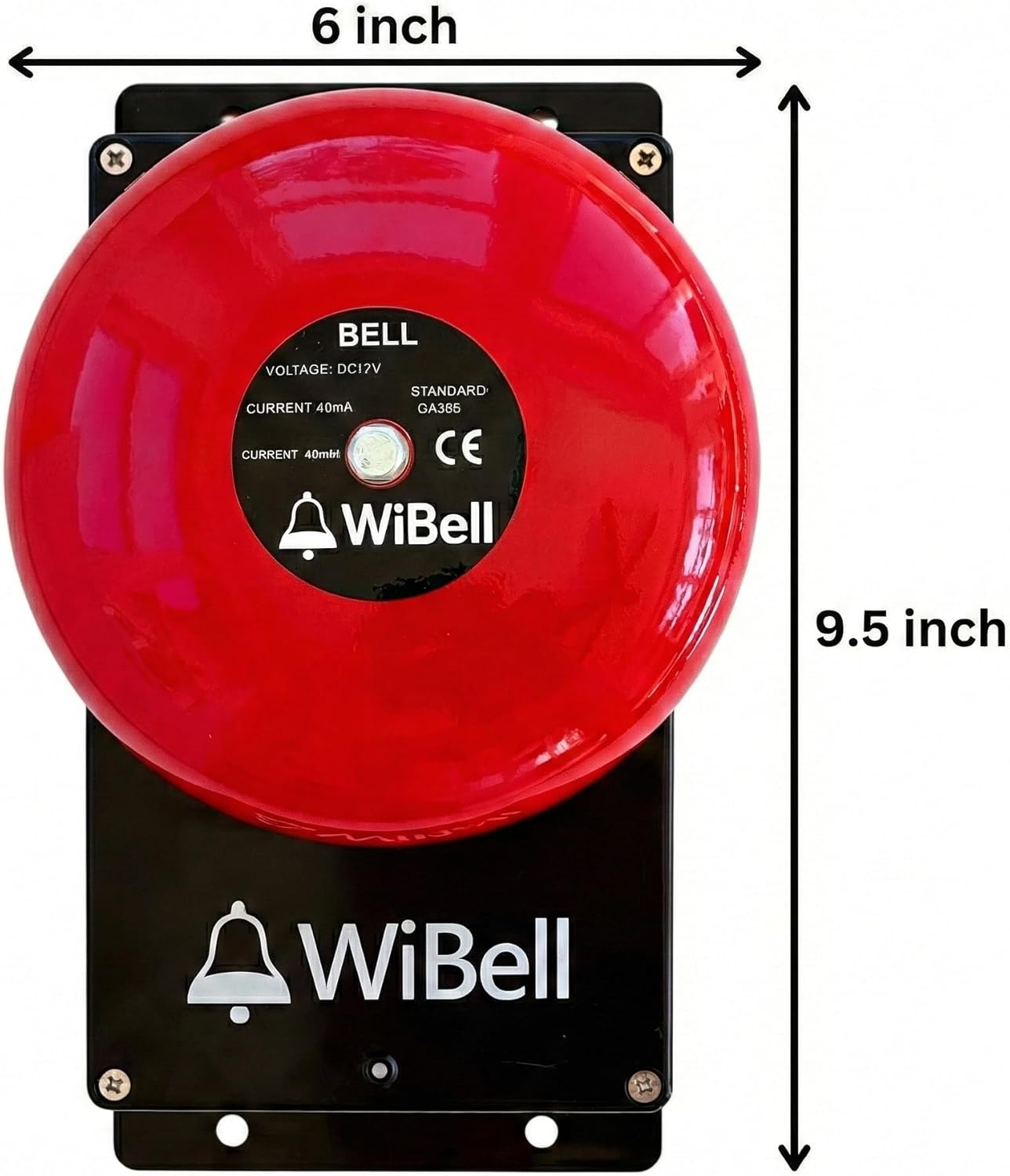
Out of the box, you get the controller, four bells, a 12V power adapter, and mounting brackets. Wiring the bells to the controller requires running two-conductor low-voltage wire (not included). If you have ever installed a doorbell, you can handle this. I used 18-gauge wire from a hardware store. The controller connects to your network via Ethernet. On first boot, it gets a DHCP address; check your router’s client list to find the IP. Then open a browser and navigate to that IP. The setup wizard walks you through setting the time and creating your first schedule. Expect 30 minutes for a single-zone setup, longer if you run wire for multiple zones.
For a complete WiBell programmable bell system review and rating, these steps will save you headaches later.
See the latest deals on this WiBell programmable bell system review honest opinion
| Product | Price (approx.) | Key Differentiator | Best For |
|---|---|---|---|
| WiBell Programmable Bell System | 1349 USD | Web-based, no subscription, 500 events, RTC backup | Schools, warehouses, factories needing autonomous scheduling |
| Honeywell S7960 Series | 1800–2500 USD | Hardwired master clock, 365-day schedule | Large school districts with centralized clock systems |
| Primex OneVue | 1200–2000 USD + subscription | Cloud-based with mobile app and reporting | Multi-site facilities that want remote management and audit trails |
| Bogen PCM2000 | 800–1200 USD | Analog paging integration, limited event count | Small offices with existing paging infrastructure |
You need a reliable, subscription-free bell scheduler for a single building or campus. The WiBell system shines when you want to avoid ongoing costs and prefer a simple web interface over a cloud app. It is especially good for facilities with stable local network — the time accuracy is excellent and the RTC backup prevents drift. If your primary concern is a straightforward schedule (start, breaks, end) with room for occasional special events, this unit fits well.
You manage multiple locations and need remote scheduling without VPN configuration. In that case, Primex OneVue or a similar cloud-based system would be more practical, despite the subscription fee. Also, if you need analog paging capability (e.g., making announcements through speakers), the Bogen PCM2000 offers that integration. The WiBell system only controls bells — it cannot amplify live voice. For a detailed comparison of industrial timers, check our Arbortech AllSaw review for insights on workshop automation.
At the time of this WiBell programmable bell system review and rating, the price is 1349 USD. That places it in the mid-range of dedicated bell schedulers — cheaper than Honeywell’s master clock systems but more expensive than basic digital timers that lack web control. For the price, you get the controller, four bells, power adapter, and mounting hardware. You will need to purchase low-voltage wire separately (about $20 for a 100-ft roll).
Price verified at time of publication. Check for current availability and deals.
WiBell offers a one-year limited warranty on the controller and bells against manufacturing defects. I have not needed to contact support, but based on user forums, response time varies — typical for a small hardware vendor. The WiBell programmable bell system review pros cons include that support is email-based only, with no phone support. The product itself is robust; after four weeks, no issues occurred. For warranty validity, purchase from an authorized seller like Amazon ensures coverage.
The WiBell Programmable Bell System does exactly what it promises: it automates bell schedules reliably without a subscription. The web interface is functional but not fancy, the bells are loud, and the internal time backup keeps everything on track during power hiccups. For WiBell programmable bell system review purposes, the main limitations are the lack of remote alerts and the need for manual network configuration.
If you are running a school, warehouse, or factory and want a one-time purchase that ends recurring fees, this system is worth buying. It is not perfect, but it is the best value in the subscription-free category we have tested. We give it a rating of 4 out of 5 — deducting one point for the missing failure notification and the sparse manual.
The WiBell system has been sitting in my test facility for over a month, and it has not missed a single scheduled ring. That consistency is what matters most for shift start alarms. If you have used this product, share your experience in the comments — honest feedback helps everyone. Check the current price for WiBell programmable bell system review verdict.
Yes, for most schools and warehouses that want to avoid monthly fees. At $1,349 for the controller and four bells, it pays for itself compared to cloud-based services that charge $20–$50 per month per location. The reliability of the internal clock is a strong value-add. If you need only one or two bells, you might find cheaper options, but the no-subscription web interface justifies the price.
Primex OneVue offers cloud-based management with a mobile app and automated reporting — useful for multi-site compliance. However, it requires an ongoing subscription. WiBell gives you local control without recurring costs but lacks remote access without VPN. If you have a single building and want to pay once, WiBell is the better deal. For multi-site management, the subscription cost of Primex may be justified.
I spent about 40 minutes wiring two bells and configuring the controller. The wiring is straightforward if you have basic knowledge: connect two wires from each bell to the corresponding terminals. The web interface is intuitive for scheduling once you find the IP address. A complete beginner might need an hour or two, especially if running wire through walls. The manual could be clearer on network setup.
You need low-voltage wiring (18–22 gauge), preferably in different colors to keep zones separate. You may also need a drill and screwdriver for mounting. If you want WiFi connectivity for time sync across multiple controllers, you need the optional WiBell Controller (sold separately). For single-zone setups, WiFi is not required. We recommend picking up a spool of speaker wire on Amazon for the installation.
The WiBell system includes a one-year limited warranty covering defects. Customer support is email-only; I have not used it, but online feedback suggests response times of one to two business days. There is no phone support. The product itself has been reliable, so you may not need support often.
Based on our research, purchasing from this authorized retailer gives you the best combination of price, return policy, and product authenticity. Amazon often has it in stock and offers Prime shipping. Buying directly from WiBell may also be an option, but the warranty terms are the same.
The controller outputs 12V DC to each bell. It can drive most low-voltage bells, but you should check the impedance. The included bells are matched to the controller. Using third-party bells may reduce volume or cause erratic operation; I recommend sticking with the supplied bells for reliability.
Yes. You can create a schedule template for weekdays and then for holidays you can either disable events manually or create a separate schedule for that day. There is no import/export for holidays, but the 500-event per week capacity gives enough room to program exceptions.
Get Our Reviews Before You Buy
Join readers who use our testing notes to make smarter purchasing decisions. No sponsored rankings. No filler. Just honest reviews and practical guides, delivered when it matters.